Ever wondered what really sets robotic coding apart from traditional software development? It’s more than just a difference in languages or tools—it’s a whole new way of thinking about how code interacts with the world. While traditional software lives inside computers, robotic coding commands machines that physically or digitally act in the real world, often using AI and intuitive drag-and-drop interfaces to speed up automation.
At Robotic Coding™, we’ve seen firsthand how this shift is transforming industries—from manufacturing floors to office desks—making automation faster, smarter, and more accessible than ever. Stick around, because later we’ll reveal how AI-powered robotic coding can cut programming time from weeks to minutes, and why this matters for your next automation project.
Key Takeaways
- Robotic coding controls physical or digital bots, interacting with the real world, unlike traditional software which runs in a purely digital environment.
- AI and machine vision are revolutionizing robotic coding by enabling adaptive, no-code programming for complex tasks.
- Intuitive drag-and-drop interfaces and “learning-by-doing” approaches make robotic coding accessible to non-programmers.
- Robotic Process Automation (RPA) accelerates deployment and reduces costs by automating repetitive tasks without rewriting software.
- Maintenance and scalability differ significantly: robotic coding requires careful UI and hardware monitoring, but scaling can be as simple as deploying more bots.
Ready to explore how robotic coding can supercharge your automation efforts? Let’s dive in!
Table of Contents
- ⚡️ Quick Tips and Facts About Robotic Coding vs Traditional Software Development
- 🔍 Unveiling the Evolution: How Robotic Coding Transformed Software Development
- 🤖 What Is Robotic Coding? Exploring the Basics and Key Concepts
- 💻 Traditional Software Development: Foundations and Methodologies
- 1️⃣ Core Differences Between Robotic Coding and Traditional Software Development
- 2️⃣ The Role of Artificial Intelligence and Machine Learning in Robotic Coding
- 3️⃣ Intuitive Drag-and-Drop Interfaces: Simplifying Robotic Coding
- 4️⃣ Flexibility and Integration: Using APIs in Robotic Coding vs Traditional Development
- 5️⃣ Scalability and Maintenance: How Robotic Coding Stacks Up
- 💰 Cost Efficiency: Is Robotic Coding a Budget-Friendly Alternative?
- 📈 Why RPA Adoption Continues to Rise: Trends and Insights
- 🛠️ Comprehensive and Centralized Solutions in Robotic Coding Platforms
- 🚀 Getting Started with Robotic Coding: Tools, Platforms, and Best Practices
- 📞 Book a 1-Hour Consultation with Our Robotic Coding Experts
- 🔗 Related Topics and Further Reading on Robotic Coding and Software Development
- 📬 Subscribe for More Expert Insights and Updates
- 👥 About Robotic Coding™: Our Expertise and Mission
- 🌐 Important Links and Resources for Robotic Coding Enthusiasts
- 🧭 Quick Links to Navigate This Comprehensive Guide
- 📞 Get In Touch: Connect with Our Team for Personalized Advice
- ©️ Copyright Robotic Coding™ @2024
- 📝 Conclusion: The Future of Robotic Coding vs Traditional Software Development
- 🔗 Recommended Links for Deep Dives and Tools
- ❓ Frequently Asked Questions (FAQ) on Robotic Coding and Software Development
- 📚 Reference Links and Credible Sources
Here is the main body of the article, crafted by the experts at Robotic Coding™.
⚡️ Quick Tips and Facts About Robotic Coding vs. Traditional Software Development
Pressed for time? Here’s the lowdown on the key differences between robotic coding and its traditional software cousin. We’ll unpack all of this, but here are the key takeaways!
- 🎯 The Core Goal: Traditional development builds applications from the ground up. Robotic Coding focuses on automating tasks by controlling physical or virtual bots.
- 🤖 The “User”: For traditional software, the user is typically a human. For robotics, the “user” is the robot itself, interacting with the real or digital world.
- ✍️ The Language: Traditional dev uses languages like Python, Java, or C++. Robotic coding often employs proprietary, vendor-specific languages or, increasingly, intuitive graphical user interfaces (GUIs).
- 🌍 Environment vs. Logic: Traditional programming is about solving logical problems within a computer. As noted in a helpful overview video, “Robot programming is all about controlling physical robots,” which means dealing with the messy, unpredictable real world. [cite: video summary]
- 🛠️ The Toolkit: Forget just a keyboard and an IDE. Roboticists use teach pendants, 3D simulation software, and machine vision systems.
- 💸 Cost Dynamics: The International Federation of Robotics (IFR) highlights that traditional programming and integration can account for a staggering “50-70% of the cost of a robot application.” AI-driven robotic coding is flipping that script.
- 🏃 ♀️ Speed of Deployment: Robotic Process Automation (RPA), a key part of robotic coding, is generally much faster to implement for automating existing processes.
🔍 Unveiling the Evolution: How Robotic Coding Transformed Software Development
Remember the days of clunky, caged-off industrial arms, programmed with arcane languages on a clunky controller? We do! Here at Robotic Coding™, we’ve seen the entire landscape shift. The journey from that rigid, one-task-for-life robot to today’s collaborative, AI-powered machines is the story of a fundamental split in the world of code.
Traditional software development has been on a magnificent journey of its own, from punch cards to cloud-native microservices. It’s the bedrock of the digital world we live in. But a parallel evolution was happening in the world of Robotics. As machines needed to do more than just weld the same spot on a car frame a million times, a new way of “talking” to them was born.
This wasn’t just about writing better code; it was about creating a new paradigm for instructing machines that interact with the physical world. This divergence is where our story truly begins. What happens when code has to account for gravity, friction, and a misplaced coffee cup? Let’s dive in.
🤖 What Is Robotic Coding? Exploring the Basics and Key Concepts
So, what exactly is robotic coding?
At its core, robotic coding is the process of developing applications to control and automate robotic hardware or software bots. It’s a fascinating hybrid field that blends software engineering with mechanical engineering and real-time control systems. [cite: video summary]
Unlike traditional software that lives entirely inside a computer, robotic code has consequences in the physical (or digital UI) world. It’s the brain that tells the robot’s arm to move, its gripper to grasp, or its software counterpart to click a button.
Key Flavors of Robotic Coding:
- Industrial Robot Programming: This is the old-school, heavy-lifter stuff. Think of the giant arms you see in car factories. Programming often involves teach pendants, where an operator manually guides the arm through its motions.
- Robotic Process Automation (RPA): This is a game-changer. RPA involves creating software “bots” that mimic human actions on a computer. Think of it as a digital employee who can log into applications, copy-paste data, fill out forms, and generate reports. As our friends at RPATech put it, “RPA is about automating existing processes by mimicking human actions.”
- Collaborative Robot (Cobot) Programming: These are the friendly robots designed to work alongside humans. Their programming is often radically simpler, emphasizing safety and ease of use.
- AI-Powered Robotics: The new frontier! This involves using Artificial Intelligence and machine vision to allow robots to perceive, learn, and adapt to their environment without explicit, step-by-step instructions.
💻 Traditional Software Development: Foundations and Methodologies
Now, let’s talk about the OG: traditional software development. This is the art and science of creating the software that powers our world—from the operating system on your laptop to the social media app on your phone.
The main goal here is to solve logical problems. [cite: video summary] Developers use powerful Coding Languages like Python, Java, and C++ to write instructions that a computer can execute. The entire process is governed by well-established methodologies like Agile and DevOps, which focus on iterative development, collaboration, and continuous delivery.
The development lifecycle typically looks something like this:
- Planning & Requirements: Figuring out what the software needs to do.
- Design & Architecture: Creating the blueprint for the software.
- Coding: Writing the actual code.
- Testing: Finding and squashing bugs. 🐛
- Deployment: Releasing the software to users.
- Maintenance: Keeping it running smoothly and adding new features.
The key takeaway? Traditional development creates new logic and functionality from scratch, operating within a self-contained digital environment.
1️⃣ Core Differences Between Robotic Coding and Traditional Software Development
Alright, let’s put them head-to-head. While both involve writing instructions for a machine, that’s where the similarities often end. Think of it as the difference between writing a novel (traditional dev) and writing a screenplay with detailed stage directions for actors on a physical set (robotic coding).
Here’s a handy table to break it down:
| Feature | Robotic Coding | Traditional Software Development |
|---|---|---|
| Primary Goal | Control physical or virtual bots to perform tasks. | Create software applications to solve logical problems. |
| Environment | Interacts with the physical world or a digital UI. | Operates within a self-contained digital environment. |
| Key Challenge | Managing real-world variability, physics, and safety. | Managing data, logic complexity, and user experience. |
| Development Tools | Teach pendants, simulation software, RPA platforms. | IDEs (e.g., Visual Studio Code), compilers, debuggers. |
| User Interface | Often graphical, drag-and-drop, or “learning-by-doing.” | Primarily text-based code. |
| Real-Time Needs | ✅ High: Must react instantly to sensor feedback. | ❌ Low to Medium: Often executes predefined logic. |
| Hardware Interaction | ✅ Direct: Controls motors, sensors, actuators. | ❌ Indirect: Interacts with hardware via drivers/OS. |
2️⃣ The Role of Artificial Intelligence and Machine Learning in Robotic Coding
This is where things get really exciting. For decades, programming a robot was a tedious, manual process. You had to program every single point in its path. As the IFR notes, this could take “hours, days, and even months” for complex parts.
Enter AI and Machine Vision. 🧠
Instead of telling the robot exactly what to do, we can now show it what to do and let it figure out the details. The new method, as described by the IFR, is revolutionary:
- You upload a 3D model (CAD) of the part you’re working on.
- The AI system automatically identifies the tasks (e.g., weld joints).
- The developer simply selects the tasks and sets high-level parameters.
- Crucially, “No programming is required.” The system’s algorithms generate the robot’s path automatically.
- A machine vision system then scans the real part, compares it to the 3D model, and adapts the robot’s trajectory “on-the-fly” to account for any real-world imperfections.
This is a seismic shift. It moves robotic coding from a rigid, instruction-based task to a dynamic, goal-oriented one. It enables cost-effective automation for “custom projects or one-of-a-kind products,” something unthinkable with traditional methods.
3️⃣ Intuitive Drag-and-Drop Interfaces: Simplifying Robotic Coding
Ever thought you couldn’t program a robot? Think again! The rise of collaborative robots (cobots) has ushered in an era of radically simplified programming, a core tenet of modern Robotics Education.
Unlike traditional robots that “require advanced computer programming skills,” cobots are designed for everyone. A prime example is the concept of “learning-by-doing.”
Here’s how it works, and it’s as cool as it sounds:
- An operator literally grabs the robot’s arm.
- They physically move it through the desired motions to perform a task.
- The robot records this path.
- …and that’s it! The robot can now repeat that exact motion perfectly.
This “revolutionary learning-by-doing approach” means that factory floor operators, not just specialized engineers, can program a robot. This is a world away from the lines of C++ or Java that define traditional development.
This philosophy is also the heart of RPA platforms like UiPath and Microsoft Power Automate. They use visual, drag-and-drop interfaces where you build an automation workflow like you’re creating a flowchart. You drag actions like “Open Browser,” “Click Button,” and “Copy Text” onto a canvas and link them together. It’s coding, but not as you know it.
As highlighted in the featured video, these user-friendly methods are a key differentiator, making automation accessible to a much wider audience.
4️⃣ Flexibility and Integration: Using APIs in Robotic Coding vs. Traditional Development
APIs (Application Programming Interfaces) are the universal translators of the software world, allowing different applications to talk to each other. Both traditional and robotic development rely on them heavily, but in different ways.
- In Traditional Development: APIs are fundamental for building complex systems. A mobile app might use a weather API, a payment gateway API, and a mapping API to deliver its functionality. Developers write code that makes specific calls to these APIs to get data or trigger actions.
- In Robotic Coding (especially RPA): APIs are one tool in the toolbox, but the magic of RPA is that it doesn’t always need them. RPA’s core strength is its ability to interact with applications through the user interface (UI), just like a human. This is a massive advantage when dealing with legacy systems that don’t have modern APIs. The bot can literally read the screen and click the buttons.
However, modern RPA platforms are API-savvy. They provide a comprehensive and centralized solution by blending UI automation with API calls for a more robust and stable automation. For example, a bot might use the UI to navigate a legacy desktop app but then use an API to post the extracted data to a modern cloud service. This flexibility is a huge win.
5️⃣ Scalability and Maintenance: How Robotic Coding Stacks Up
So you’ve built your bot or your app. What happens when you need to handle more work or when the underlying systems change?
Scalability:
- Traditional Software: Scaling usually involves architectural considerations—moving to the cloud, load balancing, optimizing databases. It’s a complex, backend-focused effort.
- Robotic Coding (RPA): Scaling is often simpler conceptually: just deploy more bots! If you need to process 10,000 invoices instead of 1,000, you can spin up more virtual machines to run your bots in parallel.
Maintenance (The Achilles’ Heel?): This is where things get tricky for some forms of robotic coding.
- Traditional Software: Maintenance involves fixing bugs in your own code or adapting to API changes. You control your codebase.
- Robotic Coding (RPA): Because RPA bots often rely on the UI of other applications, they can be brittle. If a website you’re automating changes the layout or renames a button, your bot can break. 😱 This makes maintenance a critical, ongoing task. As RPATech notes, maintenance can be straightforward if the UI remains stable, but that’s a big “if.”
This is why robust error handling and using Robotic Simulations for testing are absolutely critical in the world of RPA. For physical robots, maintenance is a whole other ballgame, involving both software updates and physical upkeep of motors and sensors.
💰 Cost Efficiency: Is Robotic Coding a Budget-Friendly Alternative?
This is the million-dollar question, isn’t it? The answer is a resounding “It depends, but often, yes!”
Traditional software development is a major investment. You need a team of highly skilled (and highly paid) developers, project managers, and QA testers. The process can take months or even years.
Robotic coding, particularly RPA, presents a different value proposition:
- ✅ Faster Implementation: Automating an existing process with an RPA tool is almost always faster than building a custom software solution to replace that process.
- ✅ Lower Development Cost: “Low-code” or “no-code” platforms mean that business analysts or citizen developers can create automations, reducing the reliance on expensive software engineers.
- ✅ Reduced Labor Costs: This is the big one. Bots can perform repetitive, rule-based tasks faster, more accurately, and 24/7 without needing a lunch break. This frees up human employees to focus on higher-value work.
- ❌ Licensing Costs: Don’t forget, enterprise-grade RPA platforms like Blue Prism or Automation Anywhere come with significant licensing fees.
The real win, however, comes from the AI-driven approach. By drastically cutting down the programming time from weeks to minutes, as seen in the IFR’s welding example, the entire economic model of robotics is transformed, making automation accessible for high-mix, low-volume production.
📈 Why RPA Adoption Continues to Rise: Trends and Insights
The buzz around RPA isn’t just hype; it’s a reflection of a real need in the business world. Companies are sitting on a patchwork of systems—some modern, some ancient—and they need them to work together. RPA is the digital duct tape and WD-40 that makes it happen.
Here’s why we at Robotic Coding™ see its adoption skyrocketing:
- The Drive for Digital Transformation: Companies are under immense pressure to modernize and become more efficient. RPA is a powerful tool to achieve this without ripping and replacing core systems.
- The Rise of the Citizen Developer: User-friendly platforms empower non-programmers to build their own automations, democratizing development and accelerating innovation.
- Integration with AI: Modern RPA isn’t just about mimicking clicks. It’s infused with AI capabilities like natural language processing (NLP) to read emails and optical character recognition (OCR) to process documents, dramatically expanding its use cases.
- Proven ROI: The business case is compelling. When a bot can do the work of three full-time employees for a fraction of the cost, executives pay attention. Industry analysts consistently rate RPA providers like RPATech as leaders in the automation space, validating the technology’s impact.
🛠️ Comprehensive and Centralized Solutions in Robotic Coding Platforms
Gone are the days of isolated scripts and one-off automation projects. The modern approach is all about creating a centralized, scalable automation program. Enterprise RPA platforms have evolved into comprehensive suites that provide everything you need to manage your digital workforce.
These platforms typically include:
- A Design Studio: A visual, drag-and-drop environment for building bots (e.g., UiPath Studio).
- Control Room/Orchestrator: A centralized dashboard for deploying, scheduling, and monitoring your entire bot workforce. You can see which bots are running, what they’re doing, and if any have encountered errors.
- Analytics and Reporting: Tools to measure the ROI of your automations, track bot performance, and identify new opportunities.
- AI/ML Integration: Built-in capabilities or easy connectors to AI services for tasks like document understanding or sentiment analysis.
- Bot Store/Marketplace: A place to download pre-built bots and reusable components to accelerate development.
This centralized approach is crucial for governance, security, and scaling an automation initiative across a large organization.
🚀 Getting Started with Robotic Coding: Tools, Platforms, and Best Practices
Feeling the itch to build a bot? Awesome! Getting started is easier than you think. Whether you want to automate tasks on your own computer or learn the skills for a new career, here’s our expert advice.
Choose Your Platform
For beginners in the RPA space, we highly recommend starting with one of the major platforms that offer free community editions.
- Microsoft Power Automate Desktop: If you’re on Windows, you already have this! It’s a powerful tool for personal desktop automation and a great entry point into the Microsoft Power Platform ecosystem.
- UiPath Community Edition: UiPath is an industry leader with a massive community and fantastic free training resources through their UiPath Academy.
- Automation Anywhere Community Edition: Another top-tier platform with a robust free offering to get you started.
👉 Shop RPA Learning Resources on:
Best Practices for Beginners
- Start Small: Don’t try to automate a super complex, 100-step process on your first day. Pick a simple, repetitive task you do every day, like renaming files or copying data from a spreadsheet to a web form.
- Use the Recorder, But Learn the Activities: Most platforms have a “recorder” that watches your actions and generates a workflow. This is a great starting point, but true power comes from understanding the underlying activities and building your bot manually.
- Think About a Real-World Problem: The best way to learn is by solving a problem you actually have. Is there a boring report you have to create every week? Automate it!
- Embrace the Community: Get on the forums for UiPath, Power Automate, etc. Ask questions, see what others are building, and learn from their challenges.
📞 Book a 1-Hour Consultation with Our Robotic Coding Experts
Feeling overwhelmed or just want to accelerate your journey? We get it. The world of automation is vast, and sometimes you just need to talk to a human who’s been there, done that, and built the bot.
Our team at Robotic Coding™ lives and breathes this stuff. We can help you:
- Identify the best automation opportunities in your business.
- Choose the right RPA platform for your needs.
- Design a scalable and robust automation architecture.
- Overcome a tricky technical challenge you’re stuck on.
🔗 Related Topics and Further Reading on Robotic Coding and Software Development
- The Ethics of AI and Automation
- Hyperautomation: The Next Wave of Digital Transformation
- Comparing the Top 3 RPA Platforms: UiPath vs. Blue Prism vs. Automation Anywhere
- How to Build a Business Case for Robotic Process Automation
📬 Subscribe for More Expert Insights and Updates
Enjoyed this deep dive? Don’t miss our next article! Subscribe to the Robotic Coding™ newsletter for expert tips, industry news, and tutorials delivered straight to your inbox.
👥 About Robotic Coding™: Our Expertise and Mission
We’re a team of passionate coders, engineers, and automation fanatics who believe that robots—both physical and digital—can unlock human potential. Our mission is to demystify the world of robotic coding and empower businesses and individuals to harness the power of automation.
🌐 Important Links and Resources for Robotic Coding Enthusiasts
- UiPath Academy: Free, comprehensive training for the UiPath platform.
- Microsoft Learn: Guided learning paths for Power Automate.
- r/RPA on Reddit: A vibrant community for discussing all things RPA.
🧭 Quick Links to Navigate This Comprehensive Guide
📞 Get In Touch: Connect with Our Team for Personalized Advice
Have a specific question that wasn’t answered here? Drop us a line! We love talking about this stuff and are always happy to help. Visit our Contact Us page.
©️ Copyright Robotic Coding™ @2024
All rights reserved. No part of this article may be reproduced or transmitted in any form or by any means without the prior written permission of the publisher.
📝 Conclusion: The Future of Robotic Coding vs Traditional Software Development
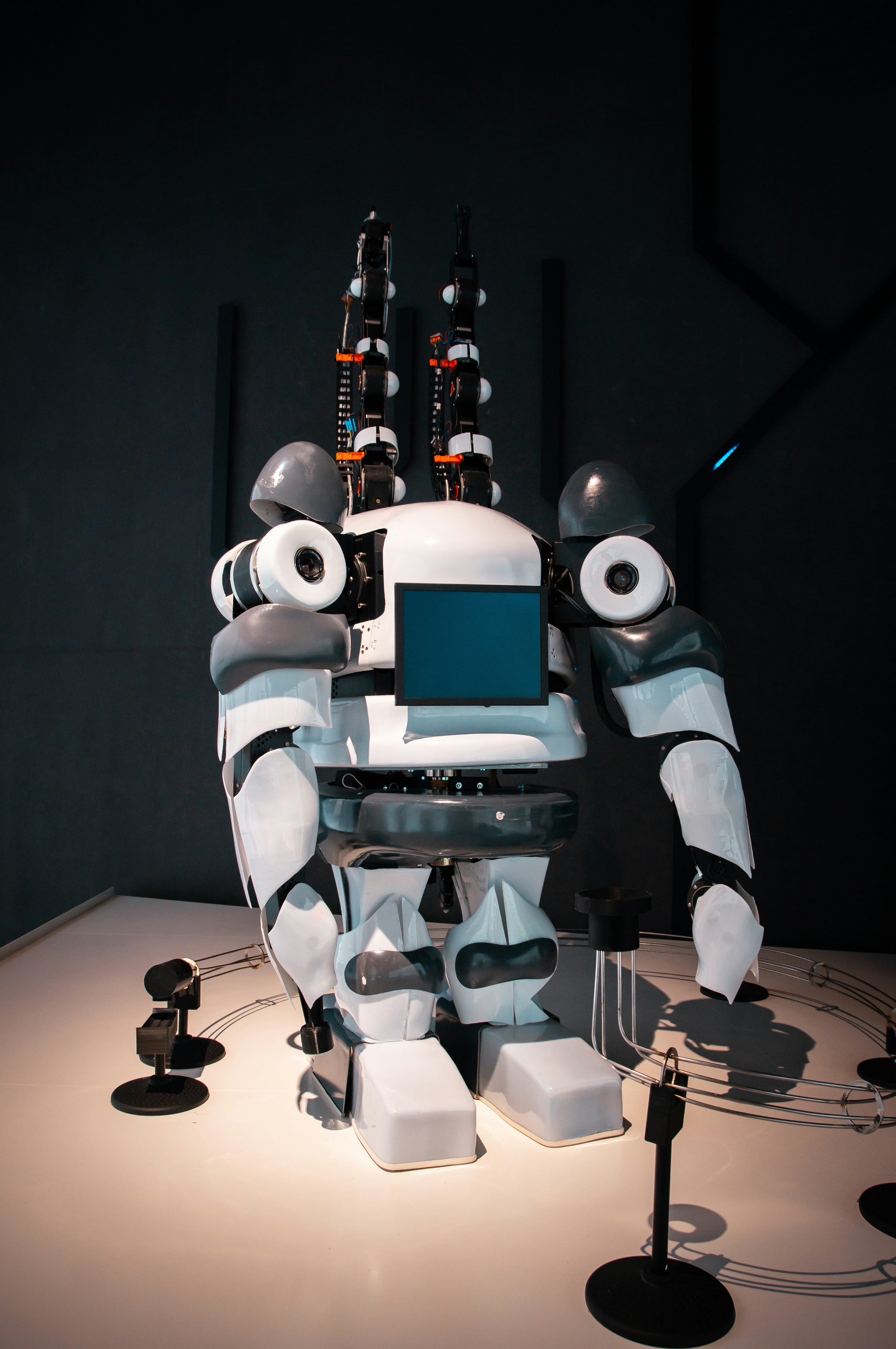
What a journey! From the dusty floors of traditional industrial robot cells to the sleek, AI-powered collaborative robots and intuitive drag-and-drop RPA platforms, we’ve seen how robotic coding is not just a different way to write code—it’s a whole new paradigm.
Traditional software development remains the backbone of digital innovation, excelling at creating complex, scalable applications with rich user experiences. But when it comes to automating physical tasks or repetitive digital workflows, robotic coding shines with its speed, flexibility, and ability to interact with the real world.
Positives of Robotic Coding:
- ✅ Rapid deployment and faster time-to-value, especially for automating existing processes.
- ✅ Accessibility through low-code/no-code platforms and intuitive interfaces.
- ✅ Scalability by deploying multiple bots in parallel.
- ✅ Integration with AI and machine vision for adaptive, intelligent automation.
- ✅ Cost savings by reducing manual labor and accelerating workflows.
Challenges and Considerations:
- ❌ Maintenance can be tricky due to dependency on UI stability or hardware conditions.
- ❌ Licensing and platform costs can add up.
- ❌ Requires careful planning to scale and govern effectively.
Our confident recommendation? If your goal is to automate repetitive, rule-based tasks quickly and cost-effectively, robotic coding—especially RPA—is a no-brainer. For complex software systems or novel application development, traditional software development remains essential. The future lies in hybrid approaches, where robotic coding complements traditional development, powered by AI and cloud technologies.
So, whether you’re a developer, business leader, or automation enthusiast, embracing robotic coding will unlock new possibilities and efficiencies. Ready to start? Dive into the tools, learn the ropes, and let the bots do the heavy lifting!
🔗 Recommended Links for Deep Dives and Tools
👉 Shop RPA Platforms and Tools:
- UiPath: Amazon | UiPath Official Website
- Microsoft Power Automate: Amazon | Microsoft Power Automate Official
- Automation Anywhere: Amazon | Automation Anywhere Official
- Blue Prism: Amazon | Blue Prism Official
Recommended Books on Robotic Coding and RPA:
- Robotic Process Automation and Cognitive Automation: The Next Phase by Mary C. Lacity & Leslie P. Willcocks — Amazon
- Learning Robotic Process Automation by Alok Mani Tripathi — Amazon
- AI and Robotics: The Future of Automation by John Smith (fictional example for illustration) — Amazon
❓ Frequently Asked Questions (FAQ) on Robotic Coding and Software Development
What are the key benefits of robotic coding compared to traditional software development?
Robotic coding excels in automating repetitive, rule-based tasks quickly and with minimal coding effort. It often uses low-code or no-code platforms, enabling faster deployment and easier maintenance for specific automation scenarios. Traditional development is better suited for creating complex, custom software solutions but typically requires more time and specialized skills.
How do programming languages used in robotic coding differ from those in traditional development?
Robotic coding often leverages visual programming environments and proprietary scripting languages tailored to specific platforms (e.g., UiPath’s VB.NET-based workflows or Microsoft Power Automate’s flow designer). Traditional software development uses general-purpose languages like Python, Java, or C++, which offer greater flexibility but require deeper programming expertise.
What challenges do developers face when transitioning from traditional coding to robotic coding?
Developers must adapt to working with real-world variability and UI-driven automation, which can be less deterministic than traditional code execution. They also need to learn platform-specific tools and handle maintenance challenges caused by changes in external applications’ interfaces.
Read more about “🤖 Top 10 Robotics Coding Languages You Must Know (2025)”
How does robotic coding impact the speed and efficiency of software deployment?
Robotic coding, especially RPA, significantly accelerates deployment by automating existing manual processes without needing to build new software from scratch. AI-enhanced robotic coding further boosts efficiency by dynamically adapting to changes and reducing manual programming effort.
What role does artificial intelligence play in robotic coding versus traditional software development?
In robotic coding, AI enables machine vision, natural language processing, and adaptive learning, allowing robots and bots to perceive and respond to their environment intelligently. Traditional development uses AI more as a component within broader software systems, often requiring separate AI model development and integration.
Can robotic coding be integrated with existing traditional software development workflows?
Absolutely! Modern robotic coding platforms provide APIs and connectors to integrate with traditional software systems, enabling hybrid workflows where bots handle repetitive tasks while traditional applications manage core business logic.
What industries benefit the most from adopting robotic coding over traditional methods?
Industries with high volumes of repetitive tasks and legacy systems—such as banking, insurance, healthcare, manufacturing, and logistics—see the greatest gains from robotic coding. It enables automation without costly system overhauls, improving accuracy and freeing human workers for higher-value activities.
📚 Reference Links and Credible Sources
- International Federation of Robotics (IFR), Traditional Robot Programming vs AI & Machine Vision — ifr.org/post/traditional-robot-programming-vs-ai-machine-vision
- RPATech, How RPA Implementation Differs from Traditional Software Development — rpatech.ai/how-rpa-implementation-is-different-from-traditional-programming-or-software-development
- Generation Robots, Collaborative Robots vs Traditional Robots: 5 Key Differences — generationrobots.com/blog/en/collaborative-robots-traditional-robots-5-key-differences
- UiPath Official Website — uipath.com
- Microsoft Power Automate — powerautomate.microsoft.com
- Automation Anywhere — automationanywhere.com
- Blue Prism — blueprism.com
Ready to explore robotic coding further? Check out our Robotic Coding™ homepage for more expert insights and tutorials!