
Ever wondered what truly sets an AI robot apart from its traditional counterpart? At first glance, both might look like futuristic machines moving with precision, but beneath the surface lies a fascinating world of differences that shape how they work, learn, and interact with their environment. From assembly lines humming with repetitive tasks to robots that adapt on the fly using machine vision and deep learning, this article unpacks the 7 key differences that every tech enthusiast, engineer, or curious mind should know.
Stick around as we reveal why AI robots are revolutionizing industries like e-commerce and agriculture, while traditional robots still dominate high-volume manufacturing. Plus, we’ll share insider tips on when to choose one over the other for your next project—and a surprising insight into why AI robots aren’t taking over everywhere just yet. Ready to decode the future of robotics? Let’s dive in!
Key Takeaways
- Traditional robots excel at repetitive, high-volume tasks with unmatched precision but lack adaptability.
- AI robots leverage machine learning and sensors to perceive, learn, and adjust in dynamic environments.
- Programming methods differ drastically: teach-pendants and offline coding for traditional robots vs. deep learning and machine vision for AI robots.
- AI robots enable high-mix, low-volume production and collaborative work alongside humans safely.
- Despite their advantages, AI robots come with higher complexity, cost, and ethical challenges that slow widespread adoption.
- Choosing the right robot depends on your project’s needs—speed and repeatability vs. flexibility and intelligence.
Curious about which robot fits your needs? Keep reading for our expert DIY guide and real-world examples!
Table of Contents
- ⚡️ Quick Tips and Facts
- 🤖 The Evolution of Robots: From Traditional Machines to AI-Powered Systems
- 🔍 What Exactly Is a Traditional Robot? Key Features and Limitations
- 🧠 Understanding AI Robots: How Artificial Intelligence Transforms Robotics
- 1️⃣ Top 7 Differences Between AI Robots and Traditional Robots
- 🎯 Programming Traditional Robots: Teach-Pendants and Offline Systems Explained
- 🚀 Programming AI Robots: Machine Vision, Deep Learning, and Adaptive Algorithms
- 🔧 Welding Robots in High-Mix Production: Traditional vs AI-Enhanced Approaches
- 🌐 Real-World Applications: Where AI Robots Outperform Traditional Robots
- 💡 Challenges and Ethical Considerations in AI Robotics
- 📈 Future Trends: The Next Frontier in Robotics and AI Integration
- 🛠️ DIY Guide: How to Choose Between an AI Robot and a Traditional Robot for Your Project
- 📚 Recommended Links for Deep Diving into Robotics and AI
- ❓ Frequently Asked Questions About AI Robots vs Traditional Robots
- 🔗 Reference Links and Credible Sources
⚡️ Quick Tips and Facts
Before we dive into the nuts and bolts of silicon brains and steel limbs, here’s a “cheat sheet” to get your gears turning:
- Traditional Robots are “dumb” but incredibly precise. They follow a rigid script. Think of them as the world’s best line cooks who can only make one specific sandwich perfectly, forever. 🥪
- AI Robots are “smart” and adaptive. They use Artificial Intelligence to perceive their environment and make decisions. They are the master chefs who can look at whatever is in the fridge and whip up a five-course meal. 👨 🍳
- Programming Gap: Traditional programming can take hours or days for a single task, while AI-driven systems can often be set up in minutes.
- Cost Factor: While the hardware might be similar, the software and integration for AI robots often require more specialized Coding Languages.
- The “Brain” vs. the “Body”: Robotics is about the physical machine; AI is about the digital intelligence. An AI robot is where those two worlds collide. 💥
- Market Insight: According to the International Federation of Robotics (IFR), programming and integration can account for 50-70% of the total cost of a traditional robot application.
🤖 The Evolution of Robots: From Traditional Machines to AI-Powered Systems
We’ve come a long way since the word “robot” was first coined by Karel Čapek in his 1921 play, R.U.R. Back then, the idea of a mechanical worker was pure science fiction. Fast forward to the 1950s—specifically the 1956 Dartmouth Conference—where the field of Artificial Intelligence was officially born.
For decades, these two fields lived in separate houses. Robotics was about the heavy lifting in car factories, while AI was about computers playing chess or solving math problems.
In our experience at Robotic Coding™, we’ve seen the “Great Convergence.” Traditional robots, like the early Unimate arms, were revolutionary because they didn’t get tired. But they were also “blind.” If a part moved two inches to the left, the robot would keep hitting the empty air.
Today, we are moving into the era of Artificially Intelligent Robots. These machines don’t just move; they think. They use Robotic Simulations to practice in virtual worlds before ever touching a physical part. But how do you tell them apart when they’re standing right in front of you? Let’s break it down.
🔍 What Exactly Is a Traditional Robot? Key Features and Limitations
A traditional robot is a programmable machine designed to perform a series of actions with extreme precision and repeatability. If you’ve ever seen a FANUC or ABB arm in an automotive plant, you’re looking at the pinnacle of traditional robotics.
The “If-This-Then-That” Logic
Traditional robots operate on deterministic logic. You tell the robot: “Go to Point A, close gripper, go to Point B, open gripper.” It will do this 24/7 without a single complaint.
Key Features of Traditional Robots:
- Repeatability: They can hit the same spot within a fraction of a millimeter every single time.
- Speed: Optimized for high-speed, high-volume production.
- Rigidity: They require a highly structured environment. Everything must be exactly where the code says it is. ✅
The Limitations:
- Lack of Perception: They don’t “see” the world. If a human walks into their path, a traditional robot (without external safety sensors) will simply keep moving. ❌
- High Setup Cost: Changing a task requires a skilled programmer to rewrite the code.
- Inflexibility: They are terrible at “high-mix” environments where the parts change frequently.
👉 Shop Industrial Robotics Gear on:
- FANUC Parts: Amazon | Official Site
- ABB Components: Amazon | Official Site
🧠 Understanding AI Robots: How Artificial Intelligence Transforms Robotics
Now, let’s talk about the “cool kids” on the block. An AI Robot is a physical machine controlled by AI programs. As noted by Robotiq, these robots exist at the intersection of the physical and the digital.
Instead of being told exactly where to move, an AI robot is often given a goal. For example, “Pick up all the red blocks.” The robot uses Machine Vision to identify the blocks, even if they are scattered randomly or piled on top of each other.
The Power of Learning
The secret sauce here is Machine Learning (ML). We often use platforms like the NVIDIA Jetson to give robots the “brainpower” they need to process visual data in real-time.
| Feature | AI Robot Capability |
|---|---|
| Perception | Uses cameras and LiDAR to “see” and map environments. |
| Adaptability | Can handle objects of different shapes and sizes without reprogramming. |
| Decision Making | Can choose the best path to avoid an obstacle. |
| Human Interaction | Often designed as “Cobots” (Collaborative Robots) like those from Universal Robots. |
CHECK PRICE on AI Development Kits:
- NVIDIA Jetson Nano: Amazon | NVIDIA Official
- TurtleBot 4: Amazon | Clearpath Robotics
1️⃣ Top 7 Differences Between AI Robots and Traditional Robots
To make this crystal clear, we’ve compiled the definitive list of differences. If you’re a student in Robotics Education, pay close attention—this is the core of modern automation.
- Learning vs. Execution: Traditional robots execute pre-defined commands. AI robots learn from data and experience to improve over time.
- Environment: Traditional robots need a “caged” or highly structured environment. AI robots can navigate dynamic, “messy” environments like hospitals or warehouses.
- Programming Method: Traditional uses Teach-Pendants; AI uses Neural Networks and Computer Vision.
- Flexibility: AI robots are “High-Mix, Low-Volume” kings. Traditional robots are “Low-Mix, High-Volume” legends.
- Sensory Input: Traditional robots use simple sensors (limit switches). AI robots use complex sensors (3D Vision, Force-Torque sensors).
- Safety: AI robots often feature Collaborative technology, allowing them to work alongside humans safely.
- Cost of Change: Re-tasking a traditional robot is expensive and slow. Re-tasking an AI robot is often as simple as updating a software model.
🎯 Programming Traditional Robots: Teach-Pendants and Offline Systems Explained
If you’ve ever stepped onto a factory floor, you’ve seen a Teach-Pendant. It looks like a giant, ruggedized iPad with a joystick.
The Manual Method (Online Programming)
In this method, a programmer literally “leads” the robot to each point in space and hits “Save.”
- Pros: What you see is what you get.
- Cons: The robot is offline (not producing) while you program it. This is a massive drain on productivity.
Offline Programming (OLP)
Software like RoboDK or Siemens Process Simulate allows us to program the robot in a virtual environment.
- The Catch: As the IFR points out, virtual models often differ from reality. You might spend hours tweaking the code once you load it onto the real robot.
👉 Shop Programming Tools on:
- Robotics Programming Books: Amazon
- Raspberry Pi 5 (for DIY coding): Amazon | Official Site
🚀 Programming AI Robots: Machine Vision, Deep Learning, and Adaptive Algorithms
This is where the magic happens. Instead of “teaching” points, we “train” models.
The New Method: “Show and Tell”
Using Machine Vision, we can upload a 3D CAD model of a part. The AI system identifies the edges and joints automatically.
- Example: In a welding application, the AI “sees” the seam and generates the path instantly. If the part is slightly crooked, the AI adjusts the path in real-time.
Deep Learning
We use frameworks like TensorFlow or PyTorch to train robots to recognize objects. We might show a robot 10,000 pictures of a “bolt” so it can find one in a bin of scrap metal.
“The system only takes 10 minutes to set the robot task for welding three seams, which is 10 times faster than traditional methods.” — International Federation of Robotics
🔧 Welding Robots in High-Mix Production: Traditional vs AI-Enhanced Approaches
Welding is the perfect “battleground” to see these differences in action.
The Traditional Nightmare
Imagine you manufacture custom bridge structures. Every beam is slightly different. With a traditional robot, you would need a programmer for every single beam. The cost of programming would exceed the profit from the job. ❌
The AI Savior
With an AI-enhanced welding system (like those from Path Robotics), the robot scans the beam, identifies the joints, and starts welding. No manual programming required. ✅
Comparison Table: Welding Efficiency
| Metric | Traditional Welding Robot | AI-Enhanced Welding Robot |
|---|---|---|
| Setup Time | 1.5 – 4 Hours | 10 – 15 Minutes |
| Part Consistency | Must be identical | Can vary significantly |
| Skill Level Needed | Expert Robot Programmer | General Operator |
| ROI for Custom Work | Very Low | Very High |
🌐 Real-World Applications: Where AI Robots Outperform Traditional Robots
While traditional robots still rule the assembly lines of Toyota and Ford, AI robots are breaking into new frontiers.
- E-commerce Fulfillment: Companies like Amazon Robotics use AI to sort millions of unique items. A traditional robot couldn’t handle the variety of shapes—from a tube of toothpaste to a fuzzy teddy bear.
- Agriculture: Robots like the Carbon Robotics LaserWeeder use AI to identify weeds and zap them with lasers, leaving the crops untouched.
- Search and Rescue: Boston Dynamics’ Spot uses AI to navigate rubble and stairs where a pre-programmed path would be impossible.
Featured Video: For a visual breakdown of these concepts, check out the featured video which explains how AI robots process information differently than their traditional counterparts.
💡 Challenges and Ethical Considerations in AI Robotics
It’s not all sunshine and rainbows. As we integrate more AI into our machines, we face new hurdles.
- The “Black Box” Problem: Sometimes, deep learning models make decisions that engineers can’t fully explain. If an AI robot makes a mistake, who is liable?
- Job Displacement: While AI creates new roles for “Robot Wranglers,” it also threatens traditional manual labor jobs.
- Security: An AI robot is a connected device. This makes it a potential target for hacking. 🛡️
- Unpredictability: As Telefonica notes, human supervision remains essential because AI can still hallucinate or misinterpret complex physical data.
📈 Future Trends: The Next Frontier in Robotics and AI Integration
What’s next? We’re looking at Generative AI (like ChatGPT) being used to write robot code on the fly. Imagine telling a robot, “Hey, clean up the coffee spill in aisle 4,” and the robot figures out the entire sequence of movements by itself.
We are also seeing the rise of Humanoid Robots. Brands like Tesla (Optimus) and Figure are betting that AI will allow robots to function in a world designed for humans, using the same tools and walking through the same doors we do.
🛠️ DIY Guide: How to Choose Between an AI Robot and a Traditional Robot for Your Project
Are you looking to automate? Here is our expert rating for different scenarios:
Scenario A: Mass Producing 100,000 Identical Plastic Spoons
- Recommendation: Traditional Robot.
- Why: You need speed and repeatability. AI is overkill here.
- Rating: 10/10 for Traditional | 2/10 for AI.
Scenario B: Sorting Recyclables from a Moving Conveyor Belt
- Recommendation: AI Robot.
- Why: The items are random, dirty, and overlapping. A traditional robot would fail instantly.
- Rating: 1/10 for Traditional | 9/10 for AI.
Scenario C: Small Shop Doing Custom Metal Fabrication
- Recommendation: AI-Enhanced Cobot.
- Why: You need something easy to program that can handle different parts every day.
- Rating: 4/10 for Traditional | 8/10 for AI.
👉 Shop DIY Robotics Kits on:
- ELEGOO Smart Robot Car: Amazon | Official Site
- SunFounder AI Robot Kits: Amazon | Official Site
But wait—if AI is so much faster to program, why isn’t every robot an AI robot by now? The answer lies in a mix of hardware costs, processing power, and a very specific type of “digital ghost” that haunts the world of coding… but we’ll get to that in the final wrap-up. 👻
Conclusion
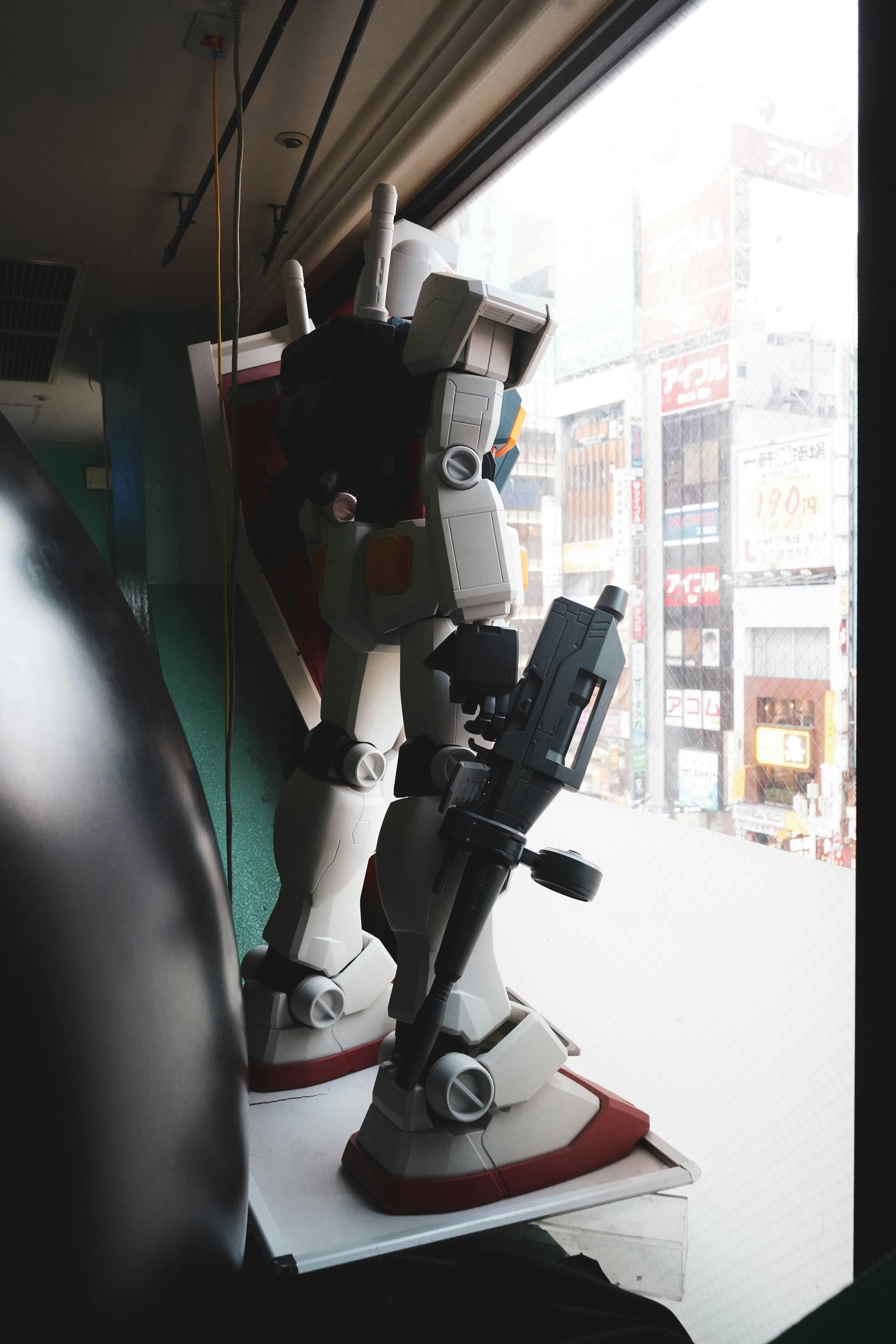
So, what’s the final verdict on the difference between AI robots and traditional robots? At Robotic Coding™, we’ve seen firsthand that traditional robots remain the backbone of high-volume, repetitive manufacturing—think automotive assembly lines where precision and speed reign supreme. They’re rock-solid performers when the environment is controlled and the task is fixed.
But when it comes to flexibility, adaptability, and handling complexity, AI robots are the game changers. Thanks to advances in machine vision, deep learning, and adaptive algorithms, AI robots can “see” their environment, learn from it, and adjust on the fly. This makes them ideal for high-mix production, custom jobs, and dynamic environments like e-commerce fulfillment, agriculture, and search-and-rescue missions.
Remember our earlier question: If AI robots are so much faster to program, why isn’t every robot AI-powered yet? The answer lies in cost, complexity, and processing power. AI robots require more sophisticated hardware and software, which can be overkill for simple, repetitive tasks. Plus, the black box nature of AI decision-making introduces new challenges in safety and liability.
Our confident recommendation:
- For mass production with minimal variation, stick with traditional robots.
- For dynamic, complex, or custom tasks, invest in AI-enhanced robots or cobots.
Both have their place, and the future will see more hybrid solutions blending the best of both worlds.
Recommended Links
👉 Shop Robotics and AI Gear:
- FANUC Industrial Robots: Amazon | FANUC Official Website
- ABB Robotics Components: Amazon | ABB Official Website
- NVIDIA Jetson Nano AI Development Kit: Amazon | NVIDIA Official
- Universal Robots Cobots: Amazon | Universal Robots Official
- Robotics Programming Books: Amazon Robotics Programming Books
- ELEGOO Smart Robot Car Kit: Amazon | ELEGOO Official
- SunFounder AI Robot Kits: Amazon | SunFounder Official
❓ Frequently Asked Questions About AI Robots vs Traditional Robots
Are AI robots more autonomous than traditional robots?
Absolutely! Traditional robots operate on pre-programmed instructions and cannot deviate from their tasks without manual reprogramming. AI robots, on the other hand, use sensors and machine learning to perceive their environment and make decisions autonomously. This autonomy allows AI robots to adapt to changes in real time, such as unexpected obstacles or variations in parts.
What role does machine learning play in AI robots compared to traditional robots?
Machine learning is the core enabler of AI robots’ adaptability. It allows AI robots to learn from data, recognize patterns, and improve their performance without explicit programming for every scenario. Traditional robots lack this capability; they rely on fixed, deterministic code and cannot learn or generalize beyond their programmed tasks.
How does robotic coding differ when developing AI robots?
Developing AI robots involves training models using frameworks like TensorFlow or PyTorch, integrating sensor data, and programming adaptive algorithms. This requires expertise in data science, machine learning, and real-time processing. Traditional robot coding focuses on motion paths, timing, and logic sequences, often using proprietary languages like FANUC’s KAREL or ABB’s RAPID, and involves teach-pendant or offline programming.
What are the main applications of AI robots and traditional robots?
- Traditional robots excel in high-volume, repetitive tasks such as automotive assembly, packaging, and material handling.
- AI robots shine in dynamic, unstructured environments like warehouse sorting, precision agriculture, medical assistance, and custom manufacturing.
Can traditional robots be upgraded with AI capabilities?
✅ Yes, to some extent. Many traditional robots can be retrofitted with AI modules such as machine vision cameras or force sensors to enhance their capabilities. However, full AI integration often requires significant hardware and software upgrades, and sometimes a complete system overhaul.
What programming languages are used for AI robots versus traditional robots?
- Traditional robots typically use proprietary languages (e.g., FANUC’s KAREL, ABB’s RAPID, KUKA’s KRL).
- AI robots use general-purpose languages like Python, C++, and frameworks such as TensorFlow, PyTorch, and ROS (Robot Operating System) for AI and machine learning components.
How do AI robots learn compared to traditional robots?
AI robots learn through data-driven training—feeding large datasets into neural networks to recognize objects, predict outcomes, or optimize actions. Traditional robots do not learn; they execute fixed instructions programmed by humans.
How does sensor integration differ in AI robots and traditional robots?
Traditional robots rely on basic sensors like limit switches and encoders for position feedback. AI robots incorporate advanced sensors such as 3D cameras, LiDAR, force-torque sensors, and sometimes even microphones to gather rich environmental data for perception and decision-making.
What are the coding challenges when developing AI robots versus traditional robots?
AI robot development involves handling complex data streams, real-time processing, model training, and validation, which require interdisciplinary skills. Traditional robot programming is more deterministic but demands deep knowledge of robot kinematics and proprietary languages. AI coding also faces challenges like explainability and safety validation.
🔗 Reference Links and Credible Sources
- International Federation of Robotics (IFR) — Traditional Robot Programming vs AI Machine Vision
- Robotiq — Difference Between Robotics and Artificial Intelligence
- Telefonica — Difference Between Robotics and AI
- FANUC Robotics Official Site — https://www.fanucamerica.com/
- ABB Robotics Official Site — https://new.abb.com/products/robotics
- NVIDIA Jetson Platform — https://www.nvidia.com/en-us/autonomous-machines/embedded-systems/
- Universal Robots Official Site — https://www.universal-robots.com/
- Path Robotics — https://www.path-robotics.com/
- Boston Dynamics Spot — https://www.bostondynamics.com/products/spot
Ready to dive deeper? Explore our Robotics Education and Artificial Intelligence categories for hands-on guides and tutorials!